
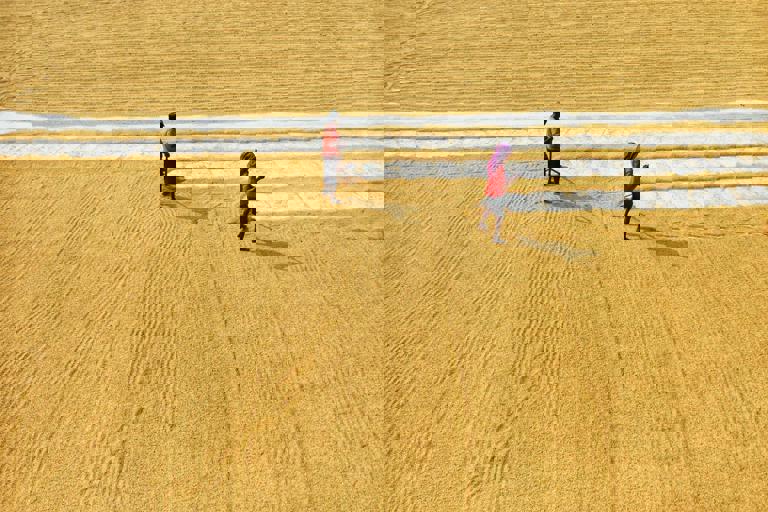
British breweries are contending with one of the most challenging barley harvests in recent memory. A stretch of prolonged dry weather across key growing regions has severely constrained this year’s barley yields, a vital crop for beer production. As farmers report crop stunting and reduced grain size, the effects are being felt throughout the brewing supply chain, raising alarm among producers and industry analysts alike.
The UK is renowned for its diverse range of breweries, from small craft operations to internationally recognised brewing giants. Barley serves as the cornerstone ingredient for many traditional ales and lagers, making the current shortage especially troubling. Brewers have expressed growing apprehension about both the security of their barley supplies and the escalating prices demanded by grain merchants this season.
According to the National Farmers’ Union (NFU), some barley fields have yielded as much as 40% less than average in affected areas. This significant reduction not only places immediate pressure on barley prices but also threatens to disrupt long-standing contracts between farmers and breweries. Mark Williams, a barley grower in Norfolk, laments, “This is the worst harvest I’ve seen in two decades—there’s just not enough barley of brewing quality to go around.”
With barley prices climbing to their highest point in five years, the cost dynamics for brewing businesses have shifted sharply. Many breweries, especially independents with tight procurement margins, are finding it difficult to absorb these spikes without passing them on to consumers. Estimates suggest pint prices could rise by as much as 10% over the next six months, directly impacting pub-goers.
The drought’s ripple effects extend beyond pricing. Supply chain experts point out that importation of barley from continental Europe may offer only a partial solution, as drought conditions have similarly affected other major producing nations. Brexit-related trade frictions further complicate cross-border sourcing for UK breweries, leading to fears of supply bottlenecks during peak demand periods like summer festivals.
UK craft breweries, revered for their commitment to authenticity and locally sourced ingredients, are particularly vulnerable. Many maintain close relationships with British farmers and pride themselves on supporting local agriculture. This year, however, they are being forced to consider alternative grains or tweak brewing recipes to cope with what one brewery owner described as "an unprecedented crisis that strikes at the heart of our identity."
Consumers are already starting to notice subtle changes on taproom menus and supermarket shelves. Some breweries have discontinued certain limited-edition lines, citing the barley shortage as a key factor. Others have issued statements apologising for the unpredictability in flavour profiles, which can stem from using a mix of barley varieties or substituting with adjunct grains like wheat or oats.
Industry associations are urging government intervention to support both farmers and brewers. The British Beer & Pub Association has called for emergency relief measures, such as temporary tax breaks or grants to encourage crop resilience research. Chief Executive Emma McClarkin stresses, "The British beer sector can't weather this storm alone. We need coordinated action to safeguard our supply chain and maintain the quality consumers expect."
Experts believe that climate resilience will become a central concern for UK agriculture in the years ahead. Many suggest investment in irrigation infrastructure, drought-resistant barley strains, and collaboration between growers and brewers to diversify sourcing as potential strategies. Dr. Simon Hobbs, an agricultural scientist at the University of Reading, says, "This event is a wake-up call. Climate volatility is testing traditional farming practices to their limits."
Some breweries have begun to innovate in response to adversity. A few are experimenting with non-barley grains such as rye, spelt, or even heritage wheat varieties, aiming to create new beer styles that both satisfy consumer curiosity and reduce reliance on a single crop. While such moves might appeal to adventurous drinkers, traditionalists may require convincing that these beers can match the taste expectations set by classic barley brews.
Looking forward, the consequences of this year’s drought could alter the face of British beer production for seasons to come. If weather extremes become the norm, the sector may have to reinvent itself around greater flexibility and adaptive supply chains. For now, brewers, farmers, and drinkers alike are united by concern over the future of one of the nation’s most cherished cultural products: the humble pint of beer, whose fate increasingly hangs in the balance of the climate crisis.