
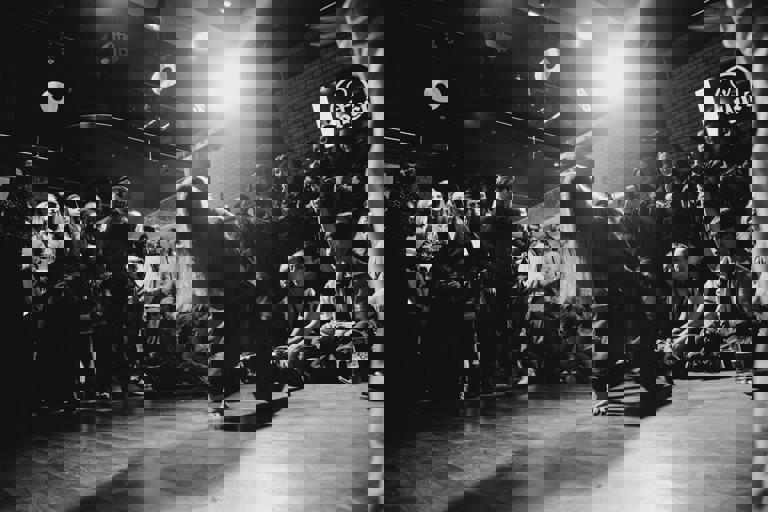
Tucked away behind an unassuming façade, the Hidden Jazz Club has quickly become a beloved fixture for music enthusiasts seeking a more personal connection with the artform. While the neighbourhood is abuzz with ambitious housing developments and the sound of construction equipment, the club stands as a quiet refuge for those in search of authentic, immersive musical experiences. Its discreet entrance and moody lighting have only added to its allure, making the discovery of its existence all the more satisfying for attendees.
The venue's intimacy is central to its appeal, attracting a crowd for whom the closeness of the musicians is just as important as the quality of the music itself. Accommodating only around fifty guests per night, each performance feels like a private concert, with attendees seated just metres away from some of the capital's most talented jazz performers. Regulars report that this arrangement creates a sense of camaraderie uncommon in larger, more commercial spaces.
Despite—or perhaps because of—its under-the-radar status, the club has developed a near-mythical reputation among jazz aficionados. "There's an energy in small rooms that you can't replicate in big venues," said Chloe Martin, a local music journalist. “Audiences aren’t distracted by spectacle; they’re completely absorbed by the sound." Over time, word of mouth has proved to be the club’s main marketing tool, with invitations often circulating among networks of passionate jazz fans.
The emergence of upscale apartment blocks and modern retail spaces in the area has lent a sense of urgency to the club’s mission. Many fear that the rapid pace of development may signal a shift in the neighbourhood’s character. According to long-time resident David Brooks, “It's getting harder and harder to find places that feel genuinely rooted in the community. The Hidden Jazz Club is one of those rare spots that reminds you what we've already got here."
The tension between tradition and transformation is palpable. While new buildings rise around it, the club has forged strong relationships with local artists—many of whom reside in the neighbourhood—and provides a stage rarely available elsewhere. These connections have fostered a creative atmosphere that supports not only established jazz performers but also emerging talents in search of their break.
On any given evening, a visitor might stumble upon an up-and-coming saxophonist debuting new material or a veteran vocalist sharing stories between songs. Musicians describe the club as a nurturing environment, with its modest scale encouraging artistic risk-taking. “You feel the audience’s response instantly,” said trumpeter Marcus Syed. “It raises your game and invites you to experiment without fear of judgment.”
Such qualities have not gone unnoticed amid a broader national decline in grassroots music venues. According to the UK Music Venue Trust, approximately one in four small venues closed over the past decade, squeezed by rising operating costs and redevelopment pressure. Against this backdrop, the Hidden Jazz Club offers an alternative vision, one in which live music is woven into the fabric of its evolving neighbourhood.
The club’s manager, Isabel Carter, acknowledges the challenges but remains optimistic about the future. She notes that their loyal following has proven adaptable, with patrons often volunteering at events or donating to support renovations. “People care deeply about our space—they see it as a kind of community living room,” Carter explained. “As long as there’s that commitment, we’ll keep finding ways to survive and thrive.”
Efforts to secure the club’s long-term future include talks with neighbourhood associations and local councillors. Advocates hope to see the venue designated as an Asset of Community Value, a status that would grant some protection against redevelopment. While not a guarantee, such measures have helped other cultural landmarks withstand the pressures of urbanisation in recent years.
Looking ahead, the club has broadened its programming to appeal to a wider audience, introducing Sunday matinees and workshops for aspiring young musicians. These initiatives have further integrated the venue into the community and underscored its role as more than just a late-night haunt. In a climate where authentic spaces often struggle to persist, these adaptive strategies may prove critical to its survival.
As the landscape outside continues to shift, the Hidden Jazz Club stands as a beacon for those devoted to London’s musical heritage. Its cult following speaks not only to the enduring appeal of jazz, but also to the resilience of independent venues facing uncertain times. For music lovers and locals alike, the club remains a reminder that cultural treasures can thrive, even as the city evolves around them.